
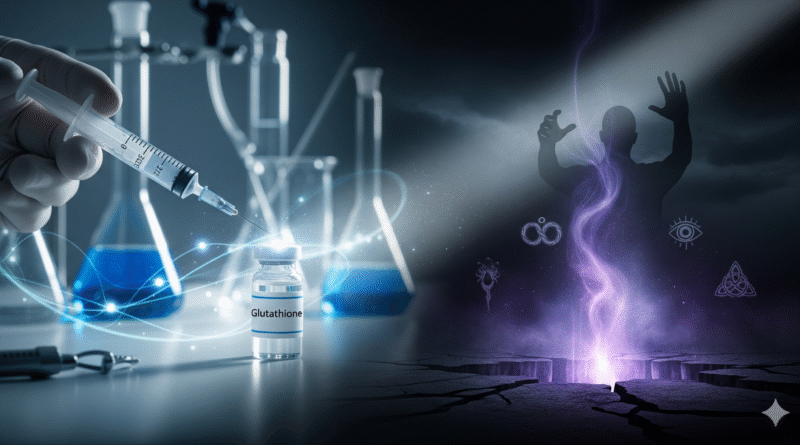
Does “Glutathione Shots” Kill? — A 360‑Degree Look at the Science and the Myths
On the night of 27 June 2025 actor–model Shefali Jariwala—popularly dubbed the “Kanta Laga girl”—collapsed at home soon after breaking a religious fast and receiving an unsupervised intravenous (IV) skin‑lightening drip containing glutathione. She was declared dead on arrival, the immediate cause being cardiac arrest; toxicology and histopathology are still ongoing. The incident has reignited an old, uncomfortable question: Can glutathione, marketed everywhere from dermatology clinics to mall spas, actually be fatal?
What Exactly Is Glutathione?
Glutathione (GSH) is a small, three‑amino‑acid molecule (γ‑glutamyl‑cysteinyl‑glycine) made inside every human cell. It is the body’s most abundant intracellular antioxidant, crucial for detoxification, immune modulation and redox signalling. Under normal circumstances it protects us; dysfunction or depletion is linked to neuro‑degeneration, liver disease and ageing.
Why the Beauty & Wellness Industry Loves It
Because glutathione shifts melanin production towards the lighter pheomelanin pathway, injectable or oral formulations became a global craze for “instant fairness”, anti‑ageing, athletic recovery and hangover cures—even though human trials remain small and inconclusive. The market for aesthetic glutathione is now worth an estimated USD 1.5 billion, much of it unregulated.
Lorem Ipsum has been the industry’s standard dummy text ever since the 1500s.
From Heartburn to Hospital — The Side‑Effect Spectrum
Most healthy adults tolerate moderate oral doses. Reported adverse events escalate with parenteral (IV/IM) use:
- Mild‑to‑moderate – bloating, cramps, transient rashes, dizziness.
- Severe, acute – anaphylaxis, asthma exacerbation, Stevens‑Johnson Syndrome/Toxic Epidermal Necrolysis (SJS/TEN), systemic inflammatory response syndrome (SIRS), sepsis from endotoxin‑contaminated vials
- Chronic / cumulative – potential hepatic stress, disruption of thyroid function, interference with natural melanogenesis and rebound hyperpigmentation.
Mechanistically, dangers arise not so much from glutathione itself but from:
- Unhygienic compounding : endotoxins or fungal/bacterial contaminants.
- Pharmacologic overdosing : osmotic or oxidative stress to kidneys and liver.
- Immune idiosyncrasies: drug‑induced hypersensitivity (e.g., SJS/TEN).
- Contextual stressors such as fasting, dehydration, concurrent drugs.
Lorem Ipsum has been the industry’s standard dummy text ever since the 1500s.
So…Can Glutathione Kill?
Direct molecular toxicity is rare—endogenous GSH normally protects life. Deaths and near‑misses reported worldwide stem from how the compound is delivered and what else rides along (endotoxins, unbuffered osmolar loads, propylene glycol, etc.). When massive oxidative or immunologic chaos follows, heart, kidney, liver or airways can fail. Existing co‑morbidities (heart disease, asthma), fasting‑induced electrolyte shifts, and self‑medication further tilt the odds.
Bottom line: Yes, under the wrong circumstances an IV glutathione session can be fatal, not because GSH is a poison but because reckless, high‑dose, unsterile or unsupervised use hijacks the very pathways it is supposed to help.
Precautionary Checklist for Consumers
- Medical supervision only. Demand a licensed physician on site with crash‑cart facilities.
- Know the indication. Evidence for chronic disease support exists, but cosmetic IV use is unapproved in many jurisdictions.
- Verify the vial. Ask for brand, batch, sterility certification, and cold‑chain history.
- Avoid during fasting or illness. Nutrient depletion and dehydration magnify risk.
- Skip megadoses. Oral intake within RDA‑like ranges (250 – 1000 mg/day) under doctor advice is safer than 5 g boluses.
- Monitor organs. Baseline and follow‑up kidney/liver panels if using extended courses.
- Watch for early red flags. Sudden itching, chest tightness, fever, or new rash after infusion warrants immediate ER transfer.
Key Takeaways (“Chords” to Remember)
- C‑major (Cause): GSH is a natural antioxidant, not inherently deadly.
- G‑major (Gap): Evidence for cosmetic benefit < safety gaps for high‑dose IV.
- D‑minor (Danger): Contamination, overdose, fasting, and comorbidities amplify risk.
- E‑major (Evaluate): Always verify product quality and professional oversight.
- A‑minor (Action): Regulators worldwide are tightening rules; consumers must self‑educate.
Conclusion
The untimely demise of a beloved pop‑culture icon has cast a harsh spotlight on an industry thriving in the grey zone between wellness and wishful thinking. Glutathione remains a life‑sustaining molecule—but when extracted from its natural cellular context, concentrated a hundred‑fold, and pushed through a vein in pursuit of lighter skin or “detox,” the line between therapy and threat blurs. Until large‑scale, peer‑reviewed trials—and stricter regulatory enforcement—catch up, caution, credible medical guidance, and informed consent are the best safeguards against turning a beauty fad into a fatal decision.
(This article is for educational purposes, not a substitute for professional medical advice.)