
Sitting Is the New Smoking: A Modern Health Crisis Unfolded
In today’s fast-paced, technology-driven world, many of us find ourselves glued to a desk, stuck in traffic, or slouched on the couch for hours on end. While we may not notice the consequences immediately, modern science has made one thing abundantly clear: prolonged sitting is slowly but surely harming our health. In fact, experts have begun to compare the dangers of chronic sitting to smoking—not because sitting literally involves toxins, but because of its systemic and long-term damage. “Sitting is the new smoking” has become more than a catchphrase; it’s a wake-up call.
The Alarming Data
A landmark study published in the Annals of Internal Medicine observed over 8,000 adults and found that individuals who sat for extended periods faced a significantly higher risk of early death from any cause. Strikingly, participants who broke up their sitting time and moved every 30 minutes had the lowest risk. This groundbreaking research added to a growing body of evidence linking prolonged sedentary behavior to numerous health issues, including diabetes, poor cardiovascular health, weight gain, depression, dementia, and even various forms of cancer.
How Sitting Affects the Body
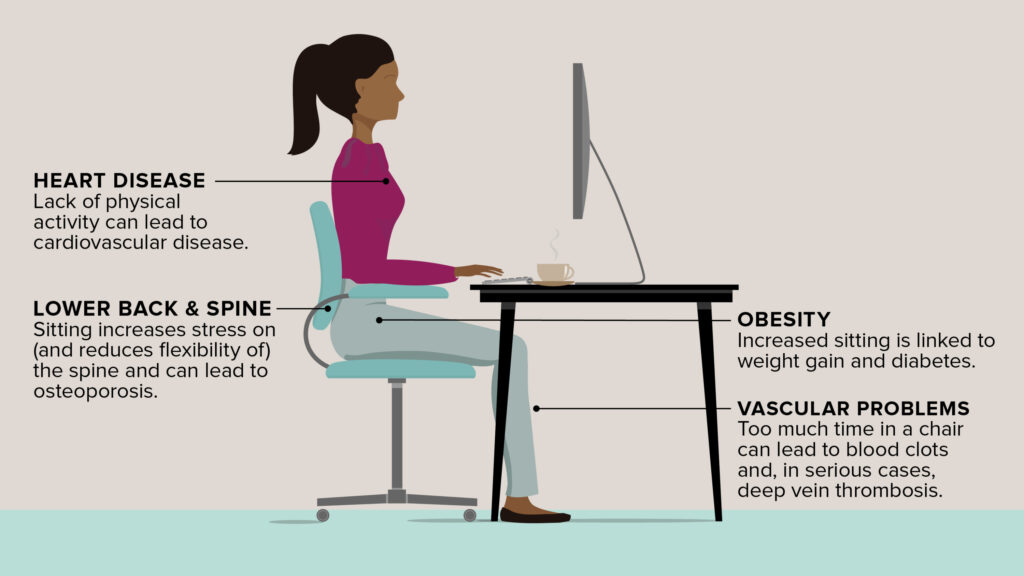
When you sit for long stretches, the body begins to shut down at a metabolic level. Your muscles burn less fat, and blood flows more sluggishly. Your insulin response drops, raising the risk of type 2 diabetes. Caloric burn decreases drastically, leading to weight gain and obesity-related diseases. Here’s how prolonged sitting harms specific systems:
1. Cardiovascular Health
Extended sitting leads to poor circulation and higher cholesterol levels. Over time, this can cause plaque buildup in arteries, raising the risk of heart attacks and strokes. Even if you exercise regularly, long periods of sitting can negate many of the benefits of your workouts.
2. Musculoskeletal Disorders
Poor posture while sitting can lead to chronic back, neck, and shoulder pain. The hip flexors and hamstrings shorten, leading to tightness and reduced flexibility. Over time, this musculoskeletal strain can severely impair mobility.
3. Mental Health
Sitting not only affects your physical body but also your brain. Lack of movement is associated with higher rates of depression and anxiety. Movement stimulates the release of mood-enhancing neurotransmitters like serotonin and dopamine. Without regular activity, emotional well-being suffers.
4. Increased Cancer Risk
Sedentary behavior has been linked to a higher risk of colon, endometrial, and even breast cancer. One theory suggests that excess insulin production may fuel cell growth, including the growth of cancerous cells.
Vascular Problems: A Silent Threat
According to Dr. Britt H. Tonnessen, a vascular surgeon, extended periods of sitting can lead to blood and fluid pooling in the lower legs and feet. This causes them to feel tired, swollen, and achy. The situation can escalate into a life-threatening condition called deep vein thrombosis (DVT). This occurs when a blood clot forms in a deep vein, typically in the legs, and can travel to the lungs, causing a pulmonary embolism.
Dr. Tonnessen explains that blood clots generally form due to one of three reasons: a predisposition due to a blood disorder, trauma or injury, or stasis (being immobile). The last factor is entirely within our control. Elderly individuals, pregnant women, smokers, and those on birth control are particularly vulnerable. “Not exercising or moving around on occasion can lead to a more extensive blood clot,” Dr. Tonnessen warns.
The Sitting-Snacking Connection
Sitting for long hours also increases the likelihood of mindless snacking. We tend to reach for sugary, salty, or high-calorie comfort foods when we’re idle. Combined with a lowered metabolic rate, this creates the perfect storm for weight gain and inflammation. It’s a vicious cycle: more sitting leads to more snacking, which leads to more fatigue and weight gain, encouraging even more sitting.
How to Combat the Sitting Epidemic
The good news? You don’t need to overhaul your entire lifestyle to see benefits. Small, consistent changes make a big impact:
- Stand Up Every 30 Minutes: Set a timer or use a smartwatch reminder to move. Even 2 minutes of walking or stretching helps.
- Invest in a Standing Desk: Adjustable workstations promote a dynamic workflow.
- Walk During Calls or Meetings: Use a headset and pace during phone conversations.
- Take the Stairs: Opt for stairs instead of elevators whenever possible.
- Use Active Transportation: Walk or cycle for short distances instead of driving.
- Stretch at Your Desk: Incorporate basic stretches to keep joints and muscles engaged.
Creating a Movement-Rich Environment
Workplaces and homes must adapt to support healthier behaviors. Employers can foster a culture of movement by encouraging walking meetings, providing standing desks, and offering wellness breaks. Families can set a good example for children by planning active screen time, such as dance sessions or yoga breaks.
Final Thoughts: Movement Is Medicine
The danger of sitting too much lies in its subtlety. Unlike smoking, it doesn’t leave a smell or produce visible signs of harm right away. But over time, the damage accumulates. What seems like a harmless lifestyle habit is, in fact, a ticking time bomb for our health.
So, the next time you find yourself sitting too long, remember: it’s not just your posture at risk. It’s your heart, your brain, your blood, and your lifespan. Get up, stretch, walk—your body will thank you.
Follow HealthfyNow.com for more insightful health stories, recent studies, lifestyle tips, and natural remedies that make your everyday living better. Movement matters—and it starts with you.
References
- Diaz, K. M., Howard, V. J., Hutto, B., Colabianchi, N., Vena, J. E., Safford, M. M., … & Hooker, S. P. (2017). Patterns of Sedentary Behavior and Mortality in U.S. Middle-Aged and Older Adults: A National Cohort Study. Annals of Internal Medicine, 167(7), 465-475. https://doi.org/10.7326/M17-0212
- Mayo Clinic. (2022). What happens to your body when you sit too much. https://www.mayoclinic.org/healthy-lifestyle/adult-health/in-depth/sitting/art-20045788