

PCOS Symptoms Most Women Ignore — Early Signs You Shouldn’t Miss
Polycystic Ovary Syndrome (PCOS) is a common yet often misunderstood endocrine disorder affecting millions of women worldwide. It’s a complex condition that can manifest in subtle ways, leading many to dismiss the early warning signs as mere inconveniences. However, recognizing these symptoms early is crucial for effective management and long-term health. This article will serve as your comprehensive guide to understanding PCOS, from its causes and symptoms to its global impact and management strategies.
What is PCOS?
Polycystic Ovary Syndrome is a hormonal disorder that affects women of reproductive age. It’s characterized by a trio of key features: anovulation (irregular or absent ovulation), hyperandrogenism (high levels of androgens, or “male hormones”) and the presence of multiple small cysts on the ovaries. These cysts, which are actually undeveloped egg follicles, give the syndrome its name. However, not all women with PCOS have cysts on their ovaries, and not all women with ovarian cysts have PCOS. This is why the condition is defined by a cluster of symptoms rather than a single marker.
PCOS is a leading cause of infertility and is linked to a higher risk of other health issues, including type 2 diabetes, cardiovascular disease, and endometrial cancer. It's a condition that disrupts the body's delicate hormonal balance, impacting everything from a woman's menstrual cycle and fertility to her appearance and metabolic health.
What Causes PCOS?
The exact cause of PCOS is still a subject of ongoing research, but it’s widely believed to be a combination of genetic, environmental, and lifestyle factors.
- Genetics & Epigenetics: PCOS often runs in families, suggesting a strong genetic component. If a woman’s mother or sister has PCOS, her risk is significantly elevated. New research also points to epigenetics—changes that affect how genes are expressed without altering the underlying DNA. Studies from sources like Live Science have highlighted how the condition’s “epigenetic memory” can be passed down, setting the stage for future generations’ health.
- Insulin Resistance: This is a key driver of PCOS. It’s estimated that up to 70% of women with PCOS have insulin resistance, a condition where the body’s cells don’t respond effectively to insulin. To compensate, the pancreas produces more insulin, leading to high levels of the hormone in the bloodstream. This excess insulin then stimulates the ovaries to produce more androgens, triggering a vicious cycle of hormonal imbalance and metabolic dysfunction.
- Chronic Inflammation: Women with PCOS often experience low-grade, chronic inflammation. This persistent inflammation can disrupt hormonal signaling and lead to an increase in androgen production. It also contributes to insulin resistance and other metabolic issues, creating a self-perpetuating cycle of health problems.
- Lifestyle & Environmental Factors: Diet and lifestyle play a significant role, particularly in populations where sedentary habits and high-calorie, low-nutrient diets are common. Obesity, especially abdominal obesity, is a major factor that exacerbates insulin resistance and hormonal imbalances, making it a powerful catalyst for the onset and severity of PCOS symptoms. As a report from the National Institutes of Health (NIH) notes, the prevalence of PCOS has a clear link to a rise in sedentary lifestyles.
What are the Symptoms of PCOS?
PCOS symptoms can vary widely among individuals, making diagnosis challenging. They often develop gradually and can be easily mistaken for other conditions or just a part of being a woman.
1. Irregular or Absent Periods: This is one of the most common and classic signs. The hormonal imbalance prevents regular ovulation, leading to unpredictable cycles, or in some cases, no periods at all (amenorrhea). This irregularity is often the first and most noticeable symptom.
2. Hirsutism (Excess Hair Growth): Due to high androgen levels, women with PCOS may develop coarse, dark hair on areas typically associated with male hair growth, such as the face (chin, upper lip), chest, back, and abdomen. This can be distressing and is a significant indicator of hormonal imbalance.
3. Acne: Persistent, severe, and often cystic acne, particularly along the jawline and chin, is a hallmark of PCOS. The excess androgens stimulate the oil glands in the skin, leading to breakouts that are resistant to standard treatments.
4. Weight Gain, Particularly Around the Abdomen: Many women with PCOS struggle with unexplained weight gain and difficulty losing weight. This is often linked to insulin resistance, as high insulin levels encourage fat storage, especially in the abdominal area.
5. Thinning Hair or Hair Loss: While hirsutism is common, some women experience hair loss on their scalp, a condition known as androgenic alopecia. The same androgens that cause hair growth on the body can cause hair thinning on the head.
6. Darkening of the Skin (Acanthosis Nigricans): This condition appears as velvety, dark patches of skin, often on the neck, armpits, and groin. It’s a direct visual sign of insulin resistance.
7. Skin Tags: Small, benign skin growths are also common, especially in the same areas affected by acanthosis nigricans.
What does PCOS do to a woman?
PCOS’s impact extends far beyond the physical symptoms. It can affect a woman’s mental, emotional, and long-term physical health.
- Infertility: PCOS is the leading cause of ovulatory infertility. The hormonal imbalance prevents the regular release of an egg, making it difficult to conceive.
- Mental Health: The physical symptoms of PCOS, such as weight gain and hair issues, can have a significant toll on a woman’s self-esteem and body image. This can lead to anxiety, depression, and social withdrawal.
- Metabolic Syndrome: PCOS increases the risk of metabolic syndrome, a cluster of conditions that includes high blood pressure, high blood sugar, excess body fat around the waist, and abnormal cholesterol or triglyceride levels. This elevates the risk of heart disease and stroke.
- Type 2 Diabetes: The insulin resistance associated with PCOS puts women at a much higher risk of developing type 2 diabetes later in life.
- Endometrial Cancer: The lack of regular ovulation means the uterine lining (endometrium) doesn’t shed monthly. This can cause the lining to thicken, increasing the risk of endometrial hyperplasia and, potentially, cancer.
What were your first signs of PCOS?
For many women, the first sign of PCOS is often a subtle, seemingly harmless change. It could be a menstrual cycle that suddenly becomes irregular after years of predictability, or persistent acne that doesn’t respond to typical treatments. It might be unexplained weight gain despite no change in diet or exercise. These subtle shifts are often the body’s first call for help.
A study from the Journal of Human Reproductive Sciences on PCOS in urban Delhi suggests that menstrual irregularities are the primary presenting symptom for many young women.
Global and Indian Statistics on PCOS
PCOS is a global health concern with varying prevalence rates across different populations.
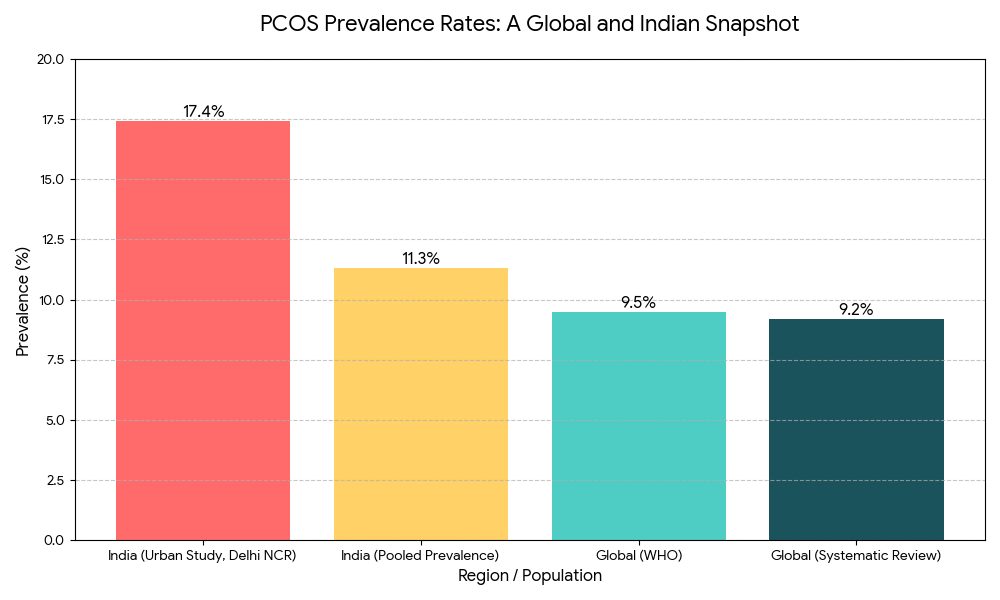
Key Takeaways
- PCOS is a Global Issue: The first two bars on the left show the global prevalence of PCOS. They tell us that roughly 9 out of every 100 women worldwide have this condition. This confirms that PCOS is a widespread health problem.
- PCOS is More Common in India: The third bar, which represents data from India as a whole, is slightly higher than the global bars. This indicates that PCOS is a bit more prevalent in India compared to the rest of the world.
- A Major Concern in Urban India: The most striking point is the last bar on the far right. At 17.4%, this bar is the tallest by a significant margin. This specific data point, from a study on young women in urban Delhi, shows that nearly 17 out of every 100 women in that area have PCOS.
Why This Matters
The chart clearly shows that while PCOS is a global health issue, its impact is disproportionately higher in urban India. This suggests that factors like modern, sedentary lifestyles, dietary habits, and environmental changes may play a significant role in triggering the condition in women who are genetically susceptible. For people in these regions, this is a clear sign to be more aware of the early symptoms and to take proactive steps toward a healthier lifestyle.
This data highlights the urgent need for greater awareness and public health initiatives to address this growing health crisis.
Can a PCOS girl get pregnant?
Yes, a woman with PCOS can absolutely get pregnant, but she may face challenges. PCOS is one of the most common causes of anovulatory infertility, meaning the hormonal imbalance prevents the regular release of an egg. However, with lifestyle modifications, medical interventions, and proper management, many women with PCOS successfully conceive.
Treatments can include lifestyle changes, medications to stimulate ovulation (like Clomiphene Citrate or Letrozole), and, in some cases, assisted reproductive technologies like IVF. Early diagnosis and proactive management are key to improving fertility outcomes.
What happens if PCOS is left untreated?
Leaving PCOS untreated can lead to a host of significant health complications. The hormonal imbalances and insulin resistance can progress, increasing the risk of:
- Type 2 Diabetes: The risk of developing type 2 diabetes is up to seven times higher in women with PCOS.
- Cardiovascular Disease: The associated metabolic issues, like high blood pressure and cholesterol, put women at a greater risk of heart attack and stroke.
- Endometrial Cancer: The chronic overgrowth of the uterine lining due to lack of ovulation significantly increases the risk of endometrial cancer.
- Infertility: Continued anovulation can lead to long-term infertility.
- Mental Health Issues: Untreated physical symptoms can exacerbate anxiety and depression.
What to eat in PCOS?
Dietary changes are one of the most effective ways to manage PCOS symptoms. A PCOS-friendly diet focuses on improving insulin sensitivity and reducing inflammation.
- Prioritize Whole Foods: Build your diet around whole, unprocessed foods like vegetables, fruits, lean proteins, and healthy fats.
- Include Fiber-Rich Foods: Fiber helps regulate blood sugar levels and improves gut health. Incorporate foods like legumes, oats, berries, and leafy greens.
- Choose Complex Carbohydrates: Opt for complex carbs with a low glycemic index, such as brown rice, quinoa, and sweet potatoes, which release sugar into the bloodstream more slowly.
- Focus on Healthy Fats: Include sources of anti-inflammatory fats like avocados, nuts, seeds, and olive oil.
- Reduce Sugar and Processed Foods: These can worsen insulin resistance and inflammation. Limit sugary drinks, white bread, pastries, and processed snacks.
- Consider a Mediterranean-style Diet: This eating pattern, rich in vegetables, fruits, fish, and healthy fats, is often recommended for its anti-inflammatory benefits.
Polycystic Ovary Syndrome is a complex condition, but it is not a life sentence. While the early signs can be subtle and easily dismissed, understanding their significance is the first step toward reclaiming your health. By recognizing the connection between genetics, insulin resistance, and lifestyle, you can take proactive steps to manage symptoms and prevent long-term complications.
At HealthyFyNOW, we believe that this journey starts now, not tomorrow. We are your partner in this, providing the knowledge and support you need to make informed choices. By embracing a holistic approach—focusing on nourishing foods, consistent movement, and a mindful attitude—you can transform your health. PCOS may be a part of your story, but it does not define it. Empower yourself with knowledge, listen to your body, and take that first step toward a healthier, more balanced life, today.
FAQ Section
Q1: Is PCOS a permanent condition?
A: PCOS is a chronic condition, but its symptoms can be effectively managed through lifestyle changes and medical treatments. Many women can significantly reduce their symptoms and improve their quality of life.
Q2: Can I reverse PCOS?
A: While there is no “cure” for PCOS, you can put the symptoms into remission. By addressing the root causes like insulin resistance and inflammation through diet, exercise, and sometimes medication, you can restore hormonal balance and alleviate many of the symptoms.
Q3: How is PCOS diagnosed?
A: Diagnosis is typically made using the Rotterdam criteria, which require a woman to have at least two of the following: irregular periods (anovulation), signs of high androgen levels (hirsutism, acne), and polycystic ovaries on an ultrasound. Blood tests may also be done to check hormone levels.
Q4: Does stress make PCOS worse?
A: Yes, stress can exacerbate PCOS symptoms. Chronic stress increases cortisol levels, which can lead to increased insulin resistance and hormonal imbalance. Managing stress through mindfulness, exercise, and adequate sleep is a crucial part of PCOS management.
Q5: Should I avoid dairy if I have PCOS? A: Some women with PCOS find that reducing or eliminating dairy helps manage their symptoms, as dairy products can sometimes increase insulin levels and inflammation. However, this is not a universal recommendation, and the response varies from person to person. It’s best to observe your body’s reaction and consult with a healthcare professional or registered dietitian.