
Ultra-Processed Foods & Depression: The Hidden Link Backed by Science
In a world increasingly defined by convenience, ultra-processed foods (UPFs) have become a staple of the modern diet. From packaged snacks and sugary cereals to frozen dinners and fast food, these products are designed for taste and longevity, not nutrition. While the link between UPFs and physical ailments like obesity, heart disease, and diabetes is well-documented, a growing body of research is now revealing a darker, more insidious connection: the link between UPFs and a global rise in mental health disorders, particularly depression.
The evidence is mounting, and it’s difficult to ignore. As UPF consumption has surged worldwide, so too have rates of depression and anxiety, especially among younger generations. This is not a mere coincidence; it is a correlation backed by numerous large-scale studies that are now beginning to uncover the complex biological mechanisms at play.
The Science Behind the Link
The connection between UPFs and depression is not a simple matter of “junk food causing a bad mood.” The science points to several interconnected biological pathways, creating a perfect storm for poor mental health.
1. Chronic Inflammation
One of the most significant pathways is chronic inflammation. UPFs are rich in refined carbohydrates, unhealthy fats, and artificial additives, all of which are known to trigger an inflammatory response in the body. While acute inflammation is a natural part of the immune system, chronic low-grade inflammation is a major risk factor for many diseases, including depression. Research has consistently shown that individuals with depression often have higher levels of inflammatory markers in their blood.
A 2025 study in The American Journal of Medicine found that people who consumed the most UPFs had significantly higher levels of high-sensitivity C-reactive protein (hs-CRP), a key marker of inflammation. The study, which analyzed data from over 9,000 U.S. adults, revealed that those in the highest UPF consumption group had an 11% higher likelihood of elevated hs-CRP levels compared to those with the lowest intake, underscoring the powerful inflammatory effect of these foods.
2. The Gut-Brain Axis
Your gut is often called your “second brain,” and for good reason. It is home to trillions of microorganisms that form the gut microbiome, which plays a critical role in mental health by producing key neurotransmitters, including serotonin, often called the “happy hormone.”
UPFs are notoriously low in dietary fiber, which is the primary food source for beneficial gut bacteria. The high sugar, unhealthy fats, and artificial additives in these foods disrupt the delicate balance of the gut microbiome, leading to a condition known as dysbiosis. This imbalance can reduce the diversity and abundance of “good” bacteria, hampering the production of mood-regulating neurotransmitters and increasing gut permeability, which can further fuel inflammation.
Research published in Nutrients in 2025 explored the impact of UPFs on the gut-brain axis, highlighting how the emulsifiers and other additives commonly found in these foods can erode the protective mucus layer of the gut lining. This breakdown allows toxins and pathogens to enter the bloodstream, triggering systemic inflammation that can directly affect brain function and mood.
3. Blood Sugar Fluctuations
The majority of UPFs are high-glycemic foods, meaning they cause a rapid spike and subsequent crash in blood sugar levels. This rollercoaster effect can lead to mood swings, irritability, and fatigue, all of which are common symptoms of depression. Over time, these frequent fluctuations can contribute to insulin resistance, a condition that has also been linked to an increased risk of depressive disorders.
A study from Harvard Medical School highlighted this particular risk, finding that higher UPF consumption was associated with a 50% increased risk of depression, with artificially sweetened beverages and processed snacks showing a particularly strong link. This suggests that it's not just the calories or fat content but the specific combination of ingredients that has a detrimental effect on mental well-being.
The Data is Resounding
The scientific consensus is growing. A meta-analysis published in 2023, which combined data from multiple studies, found a consistent and significant association between high UPF intake and an increased risk of depression and anxiety.
A particularly powerful study from the Global Mind Project involving nearly 300,000 participants across 70 countries revealed a striking correlation. The study found that over half of individuals who consumed UPFs daily reported being in a state of mental distress or struggling with their mental health, compared to just 18% of those who rarely or never ate them. This represents a nearly threefold increase in mental health challenges linked to daily UPF consumption.
The study also showed that these effects persisted across all age groups and could not be explained away by other factors like exercise or income, suggesting a direct and independent role of diet in mental health outcomes.
The data is clear:
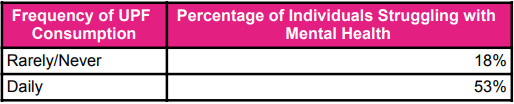
Source: Global Mind Project, 2023
Specific Foods and Their Impact
The research isn’t just theoretical; it’s pinpointing specific food types that are most concerning.
- Sugary Drinks and Cereal: A 2024 study published in the Journal of Affective Disorders found a strong correlation between the consumption of sugary cereals and soda and a higher risk of depression in young adults. The high sugar content leads to significant blood sugar spikes and crashes, disrupting mood stability.
- Processed Meats: Foods like bacon, sausages, and deli meats are high in saturated fats, sodium, and preservatives. A large-scale analysis in the British Journal of Nutrition revealed that people who consumed the most processed meats had a 20% higher risk of developing depression. These foods contribute to systemic inflammation, which is strongly linked to depressive symptoms.
- Packaged Snacks: Products such as cookies, chips, and crackers are often engineered to be hyper-palatable but lack nutritional value. A 2025 study from the University of London found that a diet high in these types of snacks was associated with a significant reduction in omega-3 fatty acids and B vitamins, both crucial for brain health. This nutritional deficit can impair cognitive function and mood regulation.
- Frozen Meals: Many frozen dinners and ready-to-eat meals are loaded with trans fats, sodium, and artificial additives. A 2023 study in Public Health Nutrition tracked over 10,000 participants and found that those who consumed frozen meals more than three times a week had a 40% increased chance of reporting symptoms of depression, likely due to the inflammatory and nutrient-depleting effects of these products.
At HealthyfyNow, we believe in empowering you with the knowledge to make healthier choices for a happier life. The link between ultra-processed foods and mental health is not a coincidence; it’s a powerful biological reality rooted in inflammation, gut health, and blood sugar stability. By consciously reducing these nutrient-depleting items, you’re not just improving your physical health—you’re creating an environment for a more resilient, balanced mind.
This isn’t about perfection; it’s about progress. Start with one simple, doable change. Swap a sugary drink for a refreshing glass of water. Choose a piece of fruit over a packaged snack. Opt for a home-cooked meal instead of a frozen one. These small steps, taken consistently, will accumulate into a monumental shift in your well-being.
Your journey to a healthier, happier you starts today. Let’s make the world a healthier place, one conscious choice at a time.
HealthyfyNow: Your Health Partner
Frequently Asked Questions
Q 1. What exactly are ultra-processed foods, and how can I identify them?
Ultra-processed foods (UPFs) are industrial formulations made mostly or entirely from substances derived from foods (like sugars, starches, and fats) and additives that aren’t typically used in home cooking (like emulsifiers, stabilizers, and artificial flavors). You can identify them by checking the ingredients list for a long list of unfamiliar names and chemical-sounding components. They’re often ready-to-eat or heat-and-eat, and common examples include sugary cereals, packaged snacks (chips, cookies), frozen pizzas, instant noodles, and many sodas and energy drinks.
Q 2. How quickly can I expect to see improvements in my mental health after reducing my intake of ultra-processed foods?
The timeline for seeing improvements can vary from person to person. Some individuals may notice subtle positive changes in their mood and energy levels within a few weeks, as their body begins to reduce inflammation and their gut microbiome starts to rebalance. However, more significant and lasting changes often take several months. Consistency is key, and the benefits accumulate over time as your body and brain become healthier.
Q 3. Does this mean I can never eat a processed food again?
Not at all. The goal is not to eliminate all processed foods but to significantly reduce your reliance on ultra-processed foods. The key is to shift your diet to be based primarily on whole, unprocessed foods like fruits, vegetables, whole grains, lean proteins, and healthy fats. Enjoying a treat occasionally is perfectly fine and doesn’t negate the benefits of a consistently healthy diet. The focus is on making a sustainable, long-term change to improve your overall well-being.